




Super User
National Energy Policy by Lieutenant-General Poonpirom Liptapanlop Minister of Energy 27 February 2008


National Energy Policy by Mr. Wannarat Channukul Minister of Energy Monday, 13 October 2008

National Energy Policy by Dr. Wannarat Channukul, Minister of Energy 12 Jan 2009

Delivered by Prime Minister Yinglak Sinnawatre to the National Assembly on Tuesday 23 August B.E. 2011

Contact Us
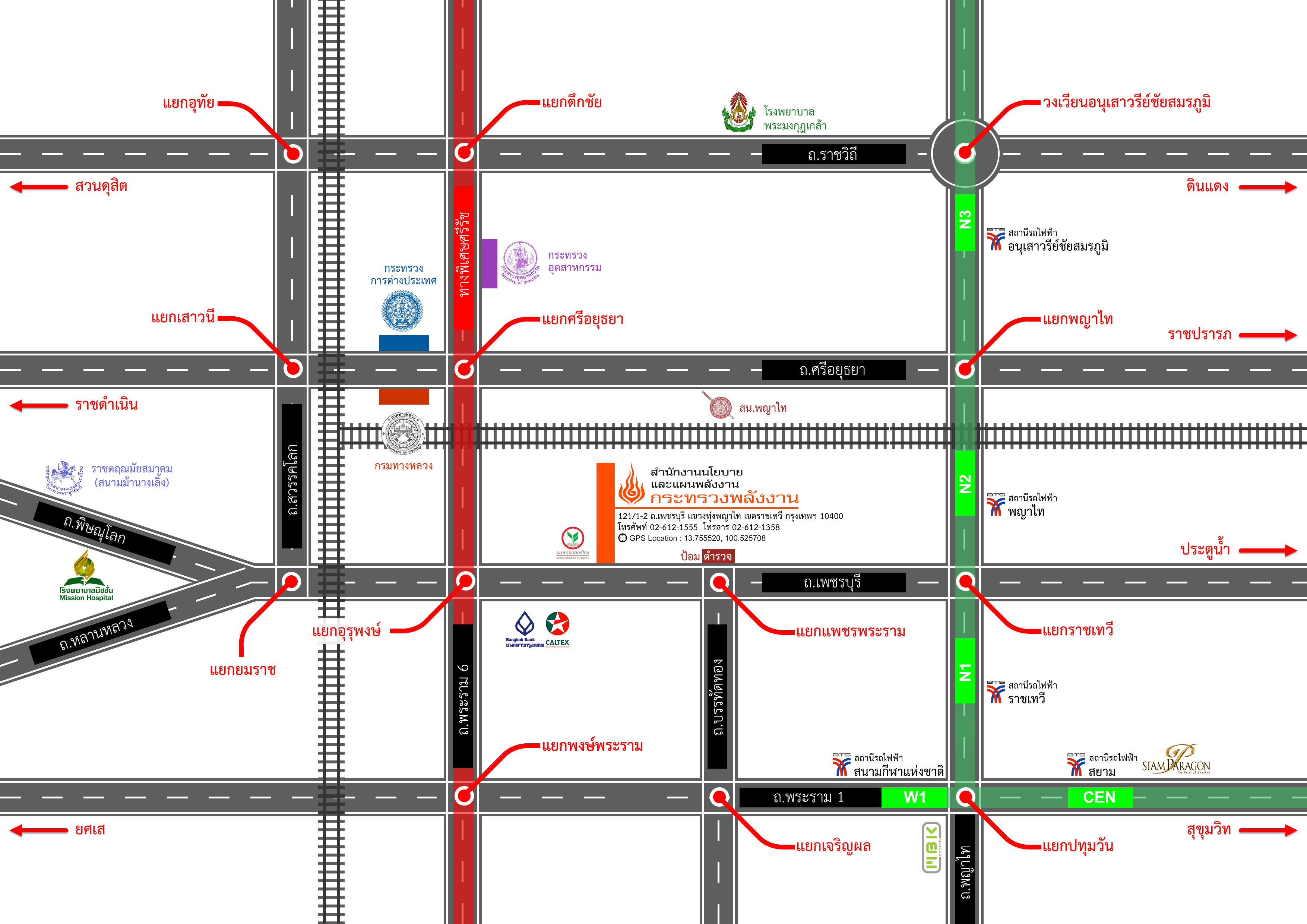
Energy Policy and Planning Office,Ministry of Energy, Royal Thai Government
121/1-2 Phetchaburi Road,
Ratchathewi, Bangkok 10400, Thailand
From outside Thailand : Tel +66 2612 1555, Fax +66 2612 1364
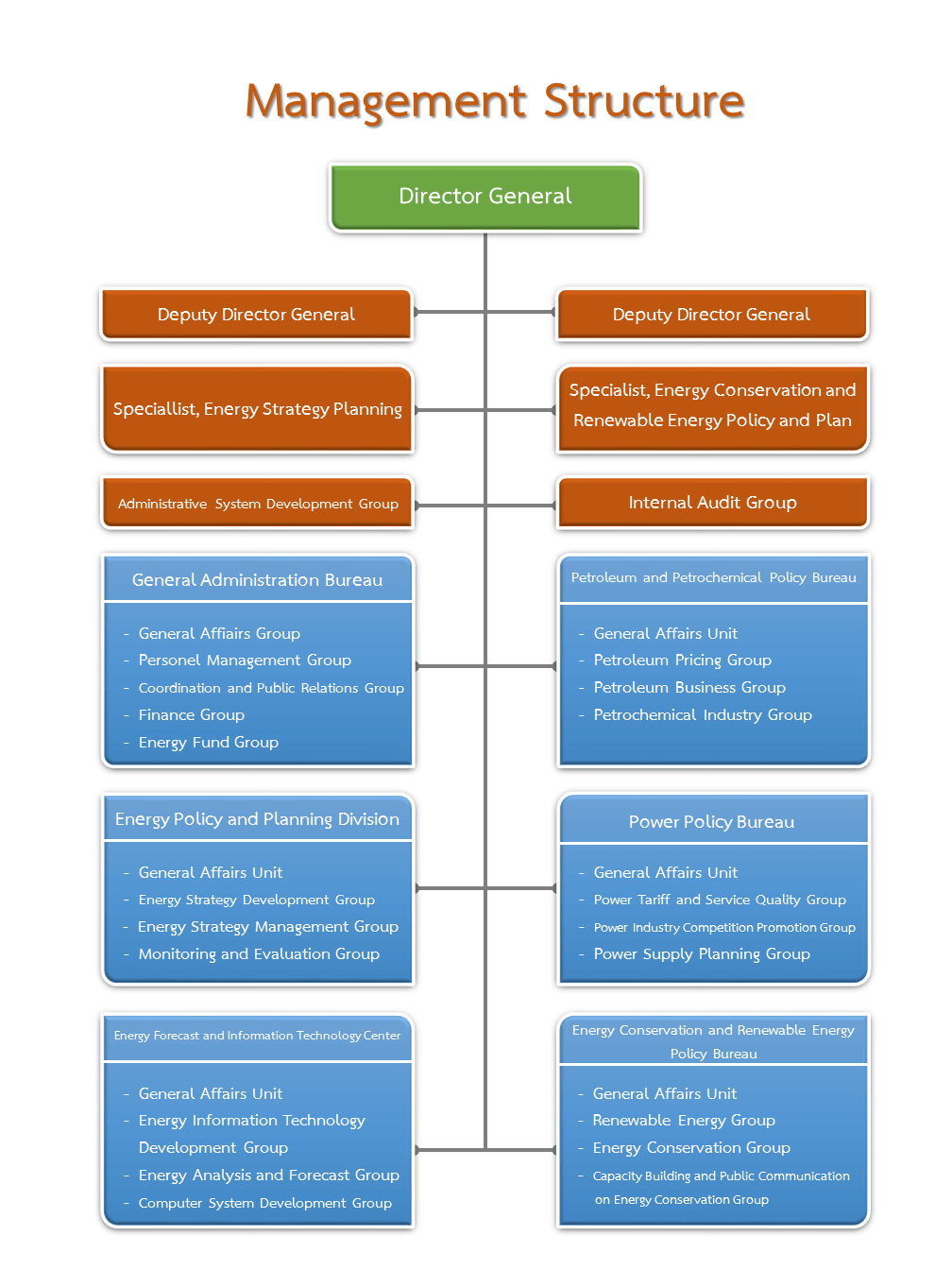
Vision Mission Value Duty
Vision
The Energy Policy and Planning Office (EPPO) is a pivotal agency in the formulation and administration of energy policies and planning for the national sustainability
Mission
EPPO is entrusted with the following six missions:
1. Recommend energy policies and integrate/review energy management plans of the country;
2. Recommend national strategies for energy conservation and alternative energy promotion;
3. Recommend measures to solve and prevent oil shortage in both short and long terms;
4. Supervise, monitor and evaluate the implementation of national energy policies and energy management plans;
5. Administer the Information and Communications Technology (ICT) with regard to energy matters of the country; and
6. Enhance EPPO to become a strategic organization.
Strategic Issues
To pursue the foregoing Vision and Mission, fie strategies are laid down:
• Strategy 1 Formulate energy policies and administer energy planning of the country;
• Strategy 2 Promote and develop alternative energy and clean energy;
• Strategy 3 Promote and develop energy conservation and efficient use of energy in all social segments;
• Strategy 4 Develop the national energy information and communications technology (ICT); and
• Strategy 5 Strengthen EPPO to become an organization of excellence in energy administration.
Core Vallues
EPPO has established the following organizational core values and culture with a view to setting a benchmark for duty execution and creating the unity among its personnel, which is unique to the office, for government officials and other staff members to continually adhere to as guidelines on their duty execution and to effectively translate them into practical actions so as to foster and sustain the organizational culture of high quality performance.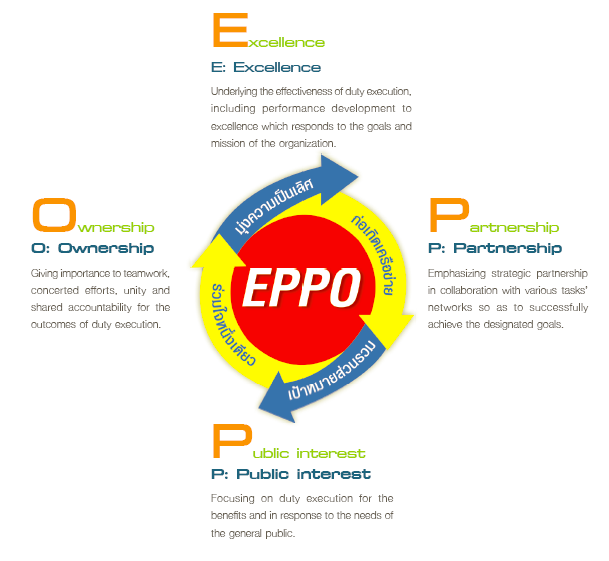
CompanyProfile
EPPO Company Profile
Introduction
The Energy Policy and Planning Office (EPPO) is responsible for recommending national energy policies and plans, inclucling energy-related measures and energy conservation to ensure well-proportioned, adequate and efficient supply of energy which corresponds with the situation of the country.
The Energy Policy and Planning Office
Develop Thailand Energy Sector to Attain International Recognition.
History of the Foundation of EPPO
Due to the global energy crises during 1973-1975 And again during 1979-1980, the world economy had to Face problems of high inflation and high unemployment, resulting in a persistent and worldwide economic slowdown for several years. Thailand was then inevitably affected by the global situations; moreover, there was a lack of unity among a number of agencies dealing with energy matters, making it difficult to control and monitor the work execution, which led to discontinuity and ineffectiveness of energy policy formulation and administration.
1986
Due to the aforementioned crises, the Government under Prime Minister General Prem Tinasulanonda had given top priority to the consideration of the improvement of energy policy management system to be more unified and presented the recommended approach to the Council of Economic Ministers on 8 September 1986, i.e. to establish the National Energy Policy Council (NEPC), together with the National Energy Policy Office (NEPO) established under the Office of the Secretariat of the Prime Minister to serve as Secretariat To the NEPC, to be in charge of the formulation of Energy policies and measures. Subsequently, Prime Minister General Prem Tinasulanonda signed the office Of the Prime Minister’s Regulation on the National Energy Administration, B.E. 2529 (1986), leading to the Appointment of the National Energy Policy Council on 16 October 1986.
1989
Later, the cabinet Under Prime Minister General Chatichai Choonhavan passed A resolution on 6 June 1989, Concurring with the NEPC Resolution to upgrade the Status of NEPO to that of a Permanent department under the Office of the Prime Minister to serve as Secretariat to the NEPC.
After the appointment of a new administration under the leadership of Prime Minister Anand Panyarachun, the following legislation were enacted: the National Energy Policy Council Act, B.E. 2535 (1992); the Act on Transfer of Part of Functions and Administrative Work of the Secretariat of the Prime Minister and of the Office of the National Economic and Social Development Board, Office of the Prime Minister, to the National Energy Policy Office, Office of the Prime Minister, B.E. 2535 (1992); the State Administration Act (No.3), B.E. 2536 (1993); the Act on Organization of Ministries, Sub-Ministries and Departments (No.9), B.E. 2536 (1993); and other related pieces of legislation to upgrade the status of NEPO to that of a permanent department under the Office of the Prime Minister, reporting directly to the Prime Minister.
1992
Later on, under the administration of Prime Minister Pol. Lt. Col. Thaksin Shinawatra, the government had a policy to reform the bureaucracy of the country with a view to improving efficiency of work execution of government agencies, by dissolving dispensable agencies so as to reduce overlapping or duplicate operational procedures and establishing several new agencies to take charge of new tasks and duties which were clearer defined. To achieve this, the State Administration Act (No.5), Act (No.5), B.E. 2545 (2002), and the Act on Organization of Ministries, Sub-Ministries and Departments, B.E. 2545 (2002), were enacted. As a result, the Ministry of Energy was then established To supervise and administer energy-related matters of the country, and the National Energy Policy Office (NEPO) was transferred from the Office of the Prime Minister to be Under the Ministry of Energy and has been renamed the Energy Policy and planning Office, or EPPO, since then.